
The Density Of The Planets In Our Solar System
Last updated: Thursday, June 08, 2023
🔖 Lost in endless scrolls? With this new Chrome Extension, you can bookmark your best responses and find them instantly.
- ✨ Save what matters
- ✨ Organize your key replies
- ✨ Skip the endless scroll
👉 Get straight to the good stuff with
ChatGPT Conversation Booster
Each planet in our solar system possesses a distinct density, which is a measure of the concentration of matter within its volume. For example, the gas giant Jupiter has a relatively low average density due to its primarily gaseous composition. In contrast, the terrestrial planets, such as Mercury, Venus, Earth, and Mars, have higher average densities due to their rocky and metallic compositions. These density variations contribute to the different gravitational pull, atmospheric conditions, and geological features observed on each celestial body.
Click On The Pictures To See The 3D Models From NASA
| Name | \(kg/m^3\) | \(lbs/ft^3\) | Ratio To Earth | |
|---|---|---|---|---|
| Saturn | 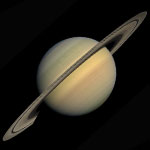 |
687 | 43 | 0.125 |
| Uranus | 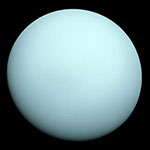 |
1270 | 79 | 0.23 |
| Jupiter | 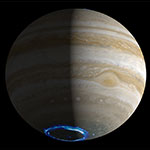 |
1326 | 83 | 0.241 |
| Neptune | 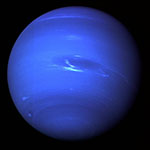 |
1638 | 102 | 0.297 |
| Pluto | 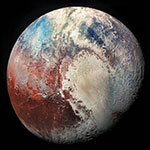 |
1850 | 116 | 0.336 |
| Moon | 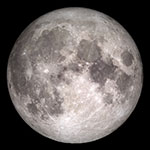 |
3340 | 209 | 0.606 |
| Mars | 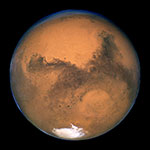 |
3934 | 246 | 0.714 |
| Venus | 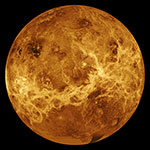 |
5243 | 327 | 0.951 |
| Mercury | 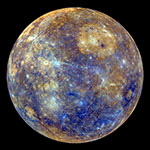 |
5429 | 339 | 0.985 |
| Earth | 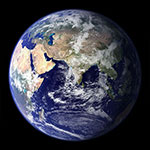 |
5514 | 344 | 1 |
| Sun | 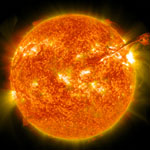 |
1408 | 88 | 0.255 |
Bookmark this page or risk going on a digital treasure hunt again
Source: NASA